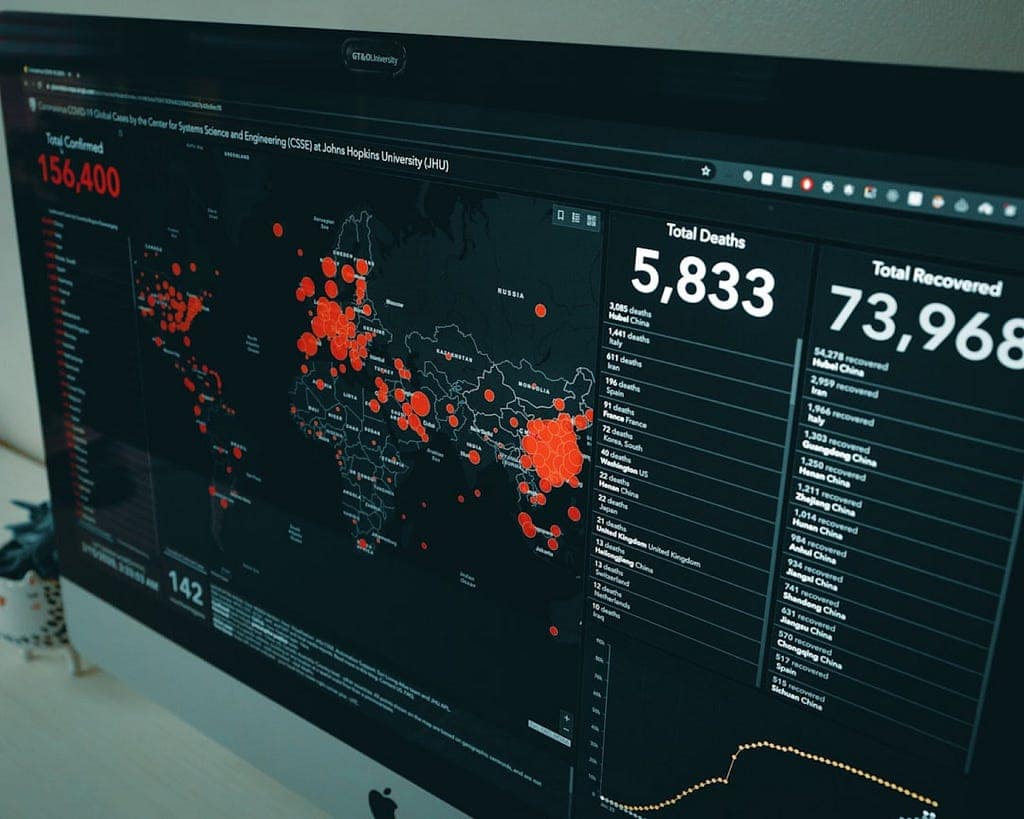
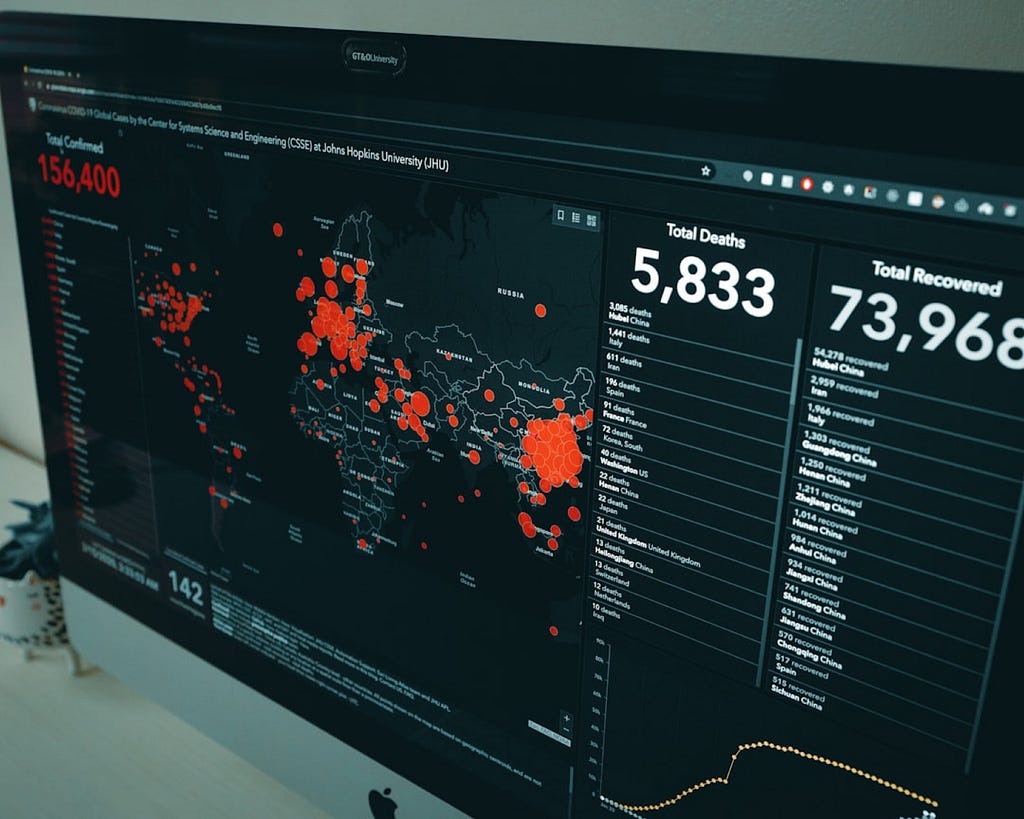
The dashboard is alive before you are.
Not metaphorically. Literally. It updates in place. Small pulses of motion, numbers ticking upward, colored indicators drifting between states. You refresh it even though it refreshes itself. There is something hypnotic about watching a system report on itself in real time. It feels like proximity to truth.
You tell yourself this is awareness.
It isn’t.
It’s monitoring.
And the difference between monitoring and knowing is where most systems quietly fail.
⸻
Monitoring Feels Like Control
A camera feed open on a second monitor. Logs scrolling in a terminal. Notifications stacking with polite urgency. The modern operator surrounds themselves with signals. It looks like vigilance. It feels like vigilance.
But monitoring is passive by design.
It collects. It displays. It waits.
A sensor does not understand what it senses. A log file does not care what it records. Even the most polished dashboard is just a curated window into raw emissions. It is a mirror, not a mind.
You can stare at it for hours and still miss the only moment that mattered.
This is not a failure of attention. It is a failure of transformation.
Because raw data, left alone, does not become meaning. It accumulates. It piles up. It drowns you slowly while convincing you that you are informed.
There is a reason people feel safer with more screens, more metrics, more feeds. The illusion scales cleanly. Add another layer, another graph, another alert threshold. You are building a perimeter of visibility.
But visibility is not comprehension.
You are watching. Not knowing.
⸻
Knowing Is an Act, Not a State
Knowing requires intervention.
Something has to take the raw signal and do violence to it. Strip it down. Compare it. Contextualize it against time, against expectation, against other signals that do not agree with it.
Knowing implies interpretation.
That word gets softened in most conversations. It shouldn’t. Interpretation is where bias enters. It is where assumptions leak in. It is also where insight lives.
A temperature reading is monitoring.
A sudden temperature increase at 3:12am, correlated with a device that should be idle, mapped against historical baselines, flagged as anomalous, and tied to a specific process that was never meant to run at that hour…
That is the beginning of knowing.
Notice the difference in density. Monitoring gives you a number. Knowing gives you a narrative.
And narratives are dangerous. They can be wrong. They can mislead. They require responsibility. Which is exactly why most systems avoid creating them.
It is safer to show you everything than to tell you anything.
⸻
The Quiet Gap Between Signal and Meaning
Most people assume the gap is small.
It isn’t.
It is wide enough to build entire industries inside.
You collect logs. That is step one. Easy. Commodity. Every device, every service, every platform is already doing it. The world is not short on data. It is suffocating in it.
Step two is normalization. Cleaning, structuring, aligning formats so that different sources can even be compared. Already, most people fall off here. They don’t notice. They assume the tools handle it. Sometimes they do. Often they don’t.
Step three is correlation. This is where things get uncomfortable. You start asking whether two separate events are actually related. You start mapping cause and effect where none is explicitly stated. You risk being wrong.
Step four is interpretation. Now you are making claims. This matters. This doesn’t. This is noise. This is signal. This is normal. This is not.
Most systems never reach step four in any meaningful way.
They stall out in a loop of collection and display. Monitoring becomes a treadmill. You run harder, gather more, visualize better, and still end up exactly where you started.
Informed, but not aware.
⸻
Why Monitoring Persists
There is a reason the world defaults to monitoring.
It scales without friction.
You can add more sensors without understanding the system. You can log more events without knowing what they mean. You can build prettier dashboards without changing anything fundamental.
It gives the appearance of progress.
Knowing, on the other hand, does not scale cleanly. It requires models. It requires context. It requires someone, or something, to take a stance.
And taking a stance creates accountability.
If your system tells you “something is wrong,” and it’s wrong about that, you lose trust. If your system tells you nothing and something goes wrong, you can always say the data was there. You just didn’t interpret it in time.
That distinction protects monitoring systems.
They cannot be wrong. They can only be incomplete.
⸻
The Cost of Staying Passive
It shows up in subtle ways first.
You miss patterns that only emerge over time because you never stitched the timeline together. You react to spikes without understanding trends. You chase anomalies that are not anomalies at all, just misunderstood baselines.
Then it escalates.
A breach that was visible in logs days before it was discovered. A system failure that could have been predicted from a sequence of minor warnings. A behavior shift that looked insignificant until it wasn’t.
In each case, the data existed.
Monitoring did its job.
Knowing never happened.
This is where people get frustrated. They feel like they were paying attention. They were watching. They had alerts configured. They were “on top of it.”
But watching is not the same as understanding.
You can observe everything and still grasp nothing.
⸻
How Data Becomes Meaning
There is no single transformation. It is a chain, and it breaks easily.
First, you reduce.
Raw data is too large, too noisy. You compress it into something manageable. Aggregations, summaries, filters. You decide what to ignore. This is the first point where meaning begins to form, because exclusion shapes perception.
Then you compare.
A number alone is inert. A number against a baseline starts to move. A number against a range of historical behavior starts to speak. You begin to see deviation, and deviation is where attention should go.
Then you contextualize.
Is this happening at a normal time? On a normal device? Under expected conditions? Context is what turns deviation into suspicion or dismisses it as routine.
Finally, you interpret.
You assign weight. You decide what matters. You choose whether to act.
That last step is where most systems hesitate. It is also where value is created.
Because interpretation is what closes the loop.
⸻
The Human Problem Inside the System
Even the most advanced setups tend to defer the final step to a human.
Someone has to look at the alert. Someone has to decide if it is real. Someone has to connect the dots across systems that were never designed to talk to each other.
This is where fatigue sets in.
If everything is an alert, nothing is. If every dashboard demands attention, attention fragments. You end up skimming signals, not engaging with them. Monitoring becomes background noise.
And then something important slips through.
Not because it was hidden. Because it was indistinguishable from everything else.
Knowing requires focus. Monitoring dilutes it.
⸻
A Brief Detour Into Trust
There is an uncomfortable layer here.
People do not just want to know. They want to trust what they know.
Monitoring systems are easy to trust because they do not make claims. They present facts, or what looks like facts. Numbers feel objective. Logs feel authoritative.
Interpretation introduces subjectivity.
Even if the interpretation is generated by a machine, it is still based on assumptions. Models, thresholds, heuristics. There is always a layer where judgment exists.
This is why many systems stop short.
They hand you the raw material and let you build your own conclusions. It feels safer. Less liability. Less friction.
But it also shifts the burden entirely onto the user.
You are expected to bridge the gap manually, every time.
⸻
The Shape of a System That Knows
It does not look dramatically different at first.
There are still sensors. Still logs. Still dashboards. The surface layer is familiar.
The difference is in what happens beneath.
Data is not just stored. It is continuously evaluated against evolving models. Relationships are not just visualized. They are inferred and tested. Patterns are not just displayed. They are recognized and ranked.
The system starts to behave less like a mirror and more like an observer.
It notices when something deviates in a way that matters, not just in a way that is measurable. It surfaces connections that are not obvious from a single data stream. It reduces the noise instead of amplifying it.
Most importantly, it commits to interpretations.
Not perfectly. Not infallibly. But consistently enough that you can start to rely on it.
This is where the shift happens.
You stop watching everything.
You start paying attention to what matters.
⸻
Why This Gap Exists at All
Part of it is historical.
Systems were built to collect before they were built to understand. Storage got cheap. Bandwidth expanded. Logging became trivial. Interpretation lagged behind because it is harder. It requires more than infrastructure. It requires design, intent, and often a willingness to be wrong.
Part of it is psychological.
People are uncomfortable delegating judgment. Especially to automated systems. There is a fear of losing control, even when the current state is mostly an illusion of control.
And part of it is economic.
There is more money in selling tools that show you everything than tools that tell you something specific. The former appeals to a broader audience. The latter demands trust and precision.
So the market leans toward monitoring.
And quietly leaves the hardest part unfinished.
⸻
Where This Leaves You
If you are building anything that touches data, you are already somewhere on this spectrum.
Maybe you are still collecting. Maybe you have dashboards. Maybe you have alerts that fire when thresholds are crossed.
That is fine. It is necessary.
But it is not sufficient.
The question is whether you are closing the gap.
Are you turning signals into something that can be acted on without requiring constant human interpretation? Are you reducing the cognitive load or just redistributing it? Are you helping someone know, or just helping them watch?
These are not abstract questions.
They show up in how systems are used under pressure. In how quickly someone can move from observation to decision. In how often something important is caught early versus discovered late.
Monitoring tells you what is happening.
Knowing tells you what it means.
And meaning is where action lives.
⸻
The Part That Usually Gets Skipped
There is a temptation to think that once you have enough data, meaning will emerge naturally.
It doesn’t.
More data increases the surface area of the problem. It gives you more to work with, but it also gives you more ways to get lost. Without a layer that actively shapes and interprets that data, you are just scaling confusion.
The systems that feel “smart” are not necessarily the ones with the most data. They are the ones that make the most disciplined decisions about what to ignore and what to elevate.
That discipline is the difference.
It is also where most people hesitate.
Because ignoring data feels like risk.
In reality, not ignoring it is the bigger risk.
⸻
A Final Shift in Perspective
Think about the last time you caught something important early.
Chances are, it wasn’t because you were staring at a dashboard waiting for it. It was because something stood out. Something broke a pattern you understood, even if you couldn’t immediately explain why.
That moment was not monitoring.
It was the beginning of knowing.
The goal is not to eliminate monitoring. It is to build something on top of it that can carry that moment forward, consistently, without relying on chance or intuition alone.
Most people never quite get there.
They keep adding screens. More data. More visibility.
And they stay just on the edge of understanding, convinced they are already inside it.
⸻
Further Reading
If you want to push deeper into how raw systems turn into something actionable, these two are worth your time:
They sit right in that gap. Not at the level of watching. At the level where things start to make sense, and sometimes make you uneasy once they do.
The Difference Between Monitoring and Knowing was originally published in OSINT Team on Medium, where people are continuing the conversation by highlighting and responding to this story.