Author: Berend Watchus. In this article as a non expert OSINT trendwatcher. Sharing trends. [Publication for: OSINT Team, online magazine]
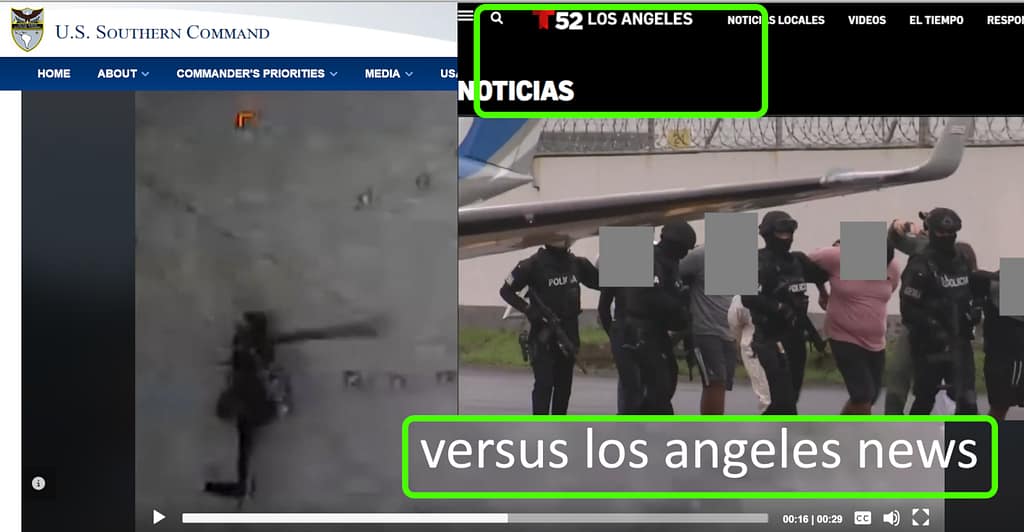
Same Operation. Two American Broadcasts. Two Different Stories.
A study in ‘parallel narratives ‘— Ecuador, March 3, 2026
On March 3, 2026, U.S. Southern Command announced what it called a historic milestone: the first U.S.-assisted ground operation against designated cartel terrorist organizations in Ecuador. Two very different stories were told about what happened that day — on the same day, in the same country, by two American media operations. The only difference was the language.
source:
Ecuadorian and U.S. Military Forces Launch Operations Against Narco-terrorists
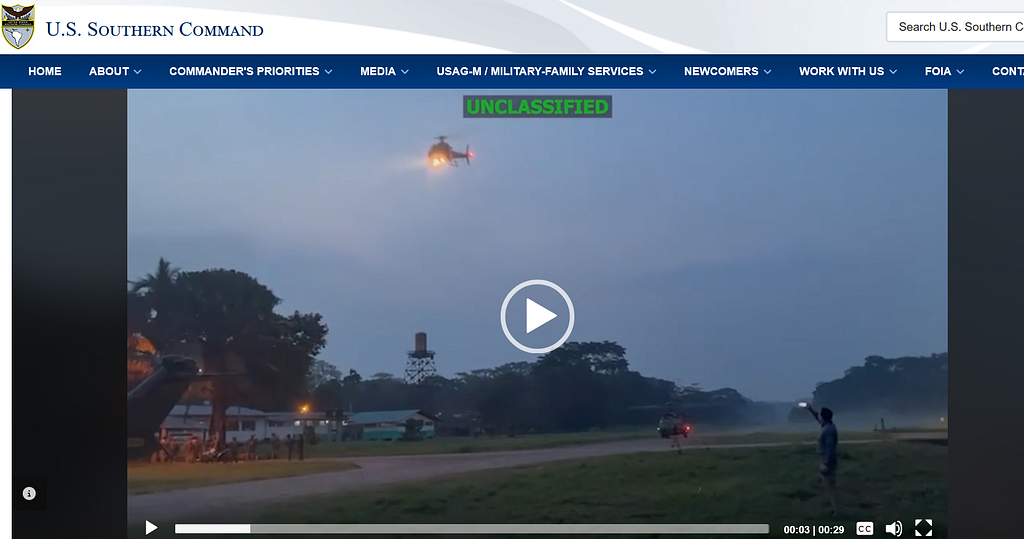
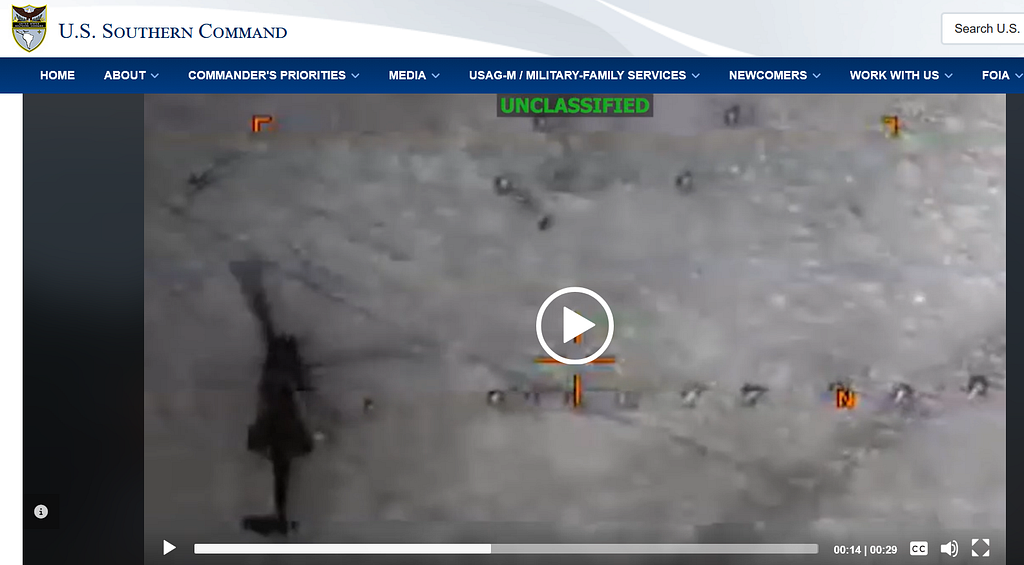
What English-speaking audiences received was a 29-second video clip published on the official SOUTHCOM website https://www.southcom.mil/News/PressReleases/Article/4420523/ecuadorian-and-us-military-forces-launch-operations-against-narco-terrorists/. It opens with a brief visible-light shot of a small helicopter at dusk, then cuts to infrared aerial footage in which personnel are indistinguishable from rocks, structures are partially visible, and the only functional data element on screen is a single compass bearing marker in the corner. No coordinates. No names. No numbers. No locations. The press release described the targets as “designated terrorist organizations” and confirmed the operation took place somewhere in Ecuador. That was the sum of it. English-language news networks largely reported within those boundaries, reflecting what the official release had provided.
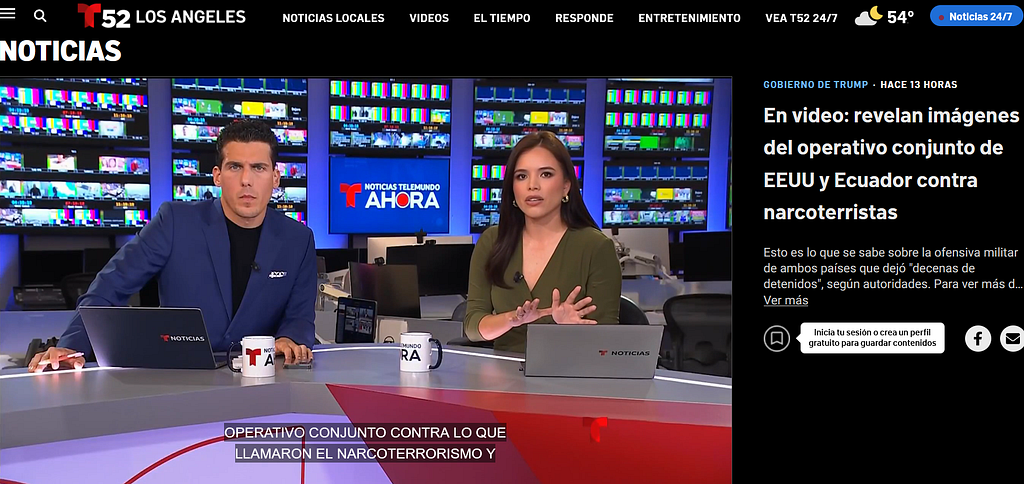

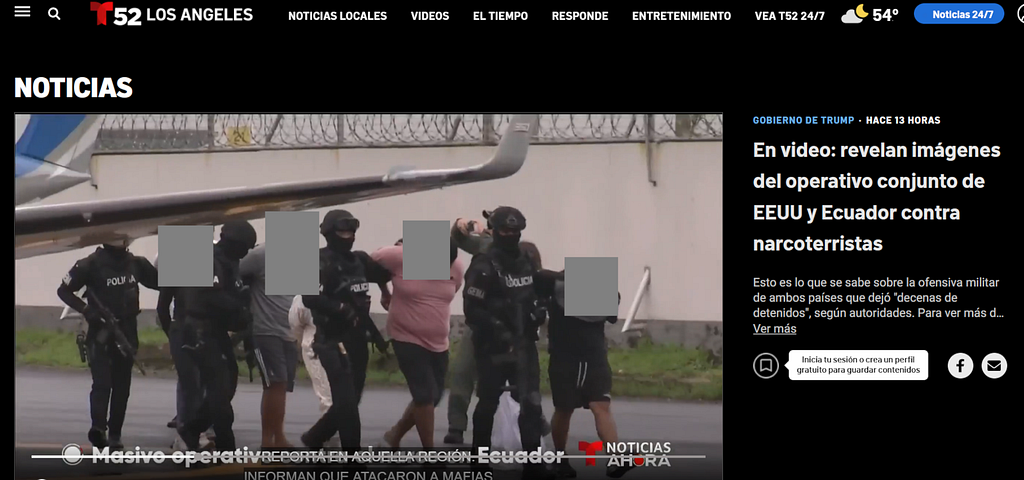
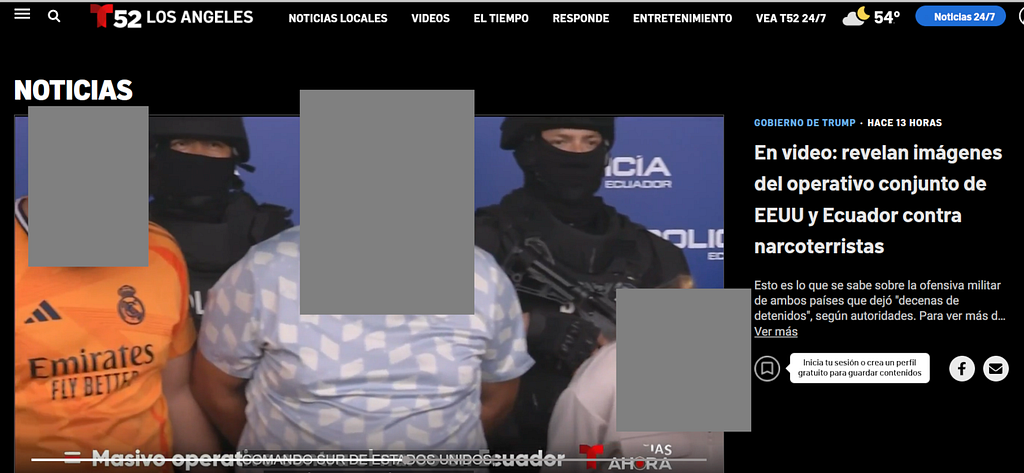
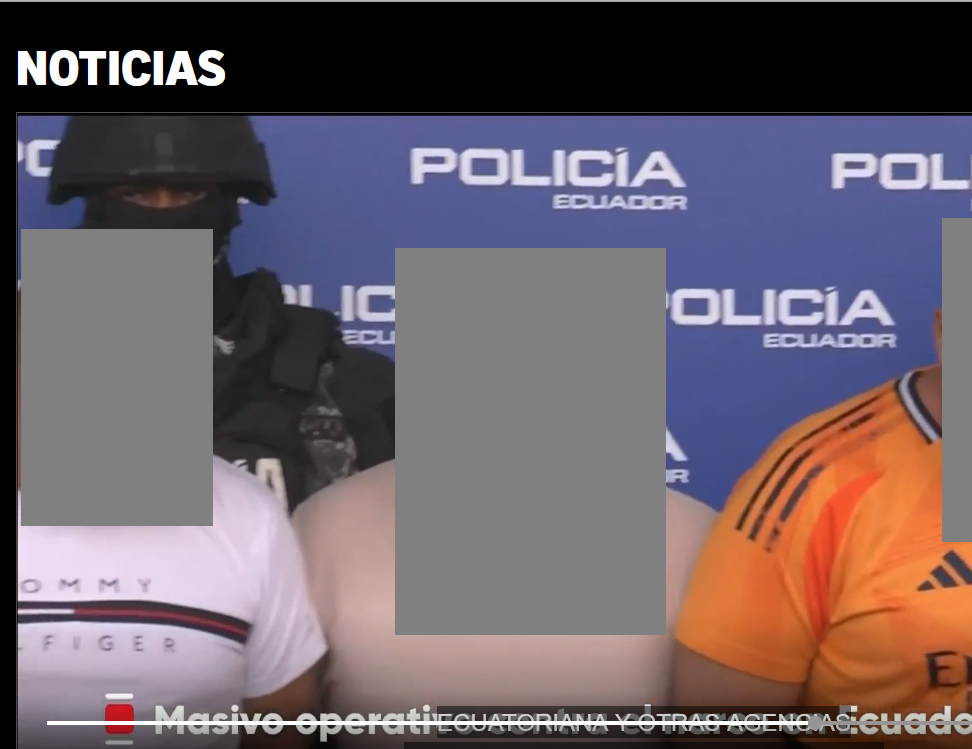
En video: revelan imágenes del operativo conjunto de EEUU y Ecuador contra narcoterristas
What Spanish-language audiences received was a different broadcast entirely. Telemundo — owned by NBCUniversal, headquartered in Florida, an entirely American media operation — aired [LINK https://www.telemundo52.com/video/noticias/eeuu/video-eeuu-ecuador-operativo-conjunto-narcoterroristas/2843464/] interior raid footage shot inside actual target locations, with seized pistols and ammunition laid out for the camera. It showed detainees — faces visible, hands bound — being walked across an airport tarmac by GEMA operators, Ecuador’s elite special police unit. It named Guayaquil as one of the cities involved. It referenced international agency cooperation. It confirmed dozens of arrests. It showed a formal Policía Ecuador press conference with detainees presented publicly before cameras. It showed operators breaching doors. It showed the human reality of what the operation actually produced on the ground.
Same operation. Same day. Same country. Two American outlets. Separated only by language.
This is not a story about foreign media revealing what American media suppressed. Telemundo is not a foreign outlet.
It is American television, operating under the same First Amendment, on the same soil, reaching millions of American viewers.
There was no classification barrier between the two broadcasts. No security clearance was required to access the fuller picture. An American citizen needed only to change the channel — or more precisely, change the language — to move from deliberate visual noise to arrest footage, faces, locations, and confirmed results.
The question this raises is uncomfortable. Did English-language outlets simply not look at what their American Spanish-language counterparts were broadcasting? Did SOUTHCOM calculate that a more detailed account circulating in Spanish posed no narrative risk to the English-language story it was managing? Or is the simpler explanation the correct one — that Telemundo’s journalists, with deeper sourcing and closer proximity to Latin American institutions, were in rooms that English-language crews were not?
The answer is probably the last one. But the result is the same regardless of the reason.
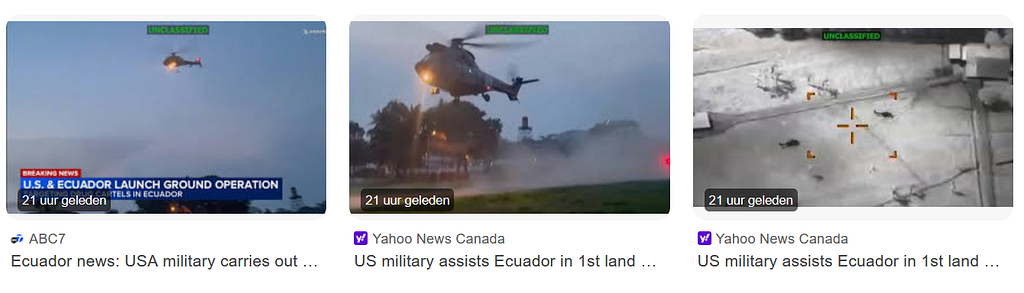
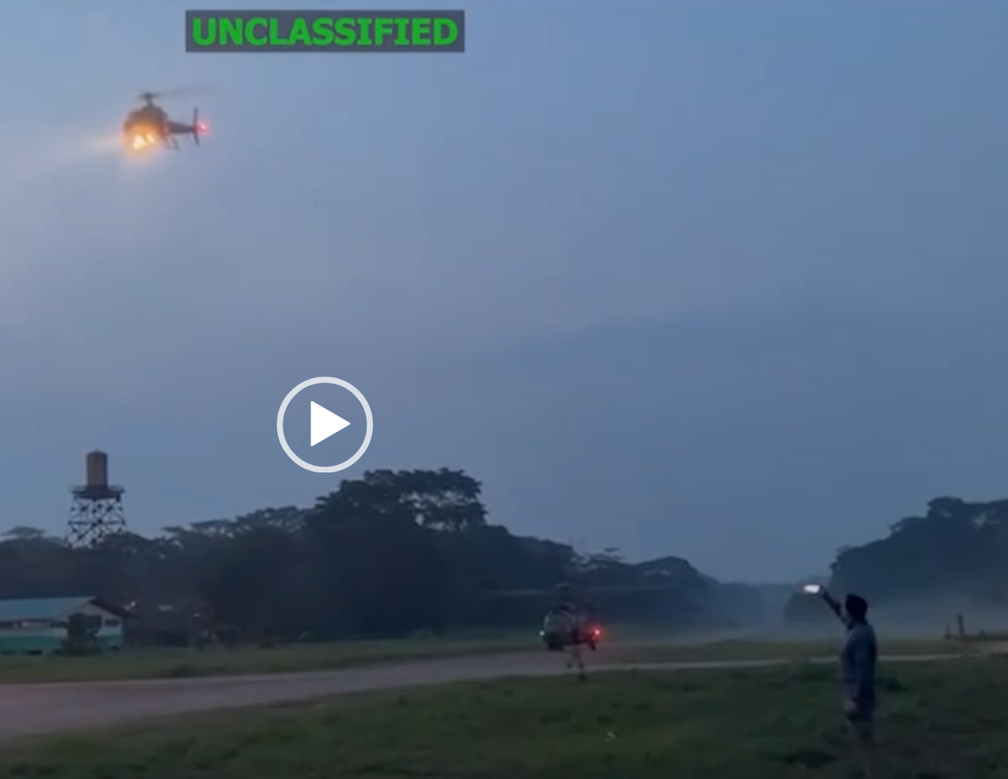
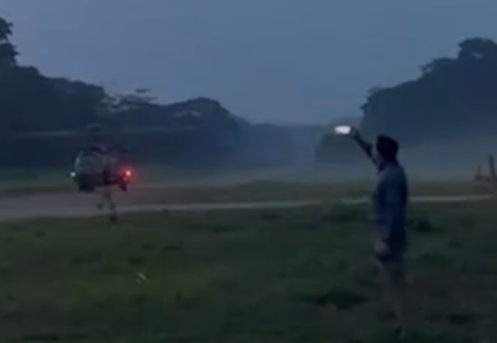
One small detail from the SOUTHCOM footage captures the broader tension perfectly. In the visible-light helicopter departure sequence, a figure can be seen on the right side of the frame, arm raised, filming the departing helicopter on a personal smartphone. SOUTHCOM spent considerable effort producing footage stripped of all identifying information. On the same base, at the same moment, a phone was already doing the opposite — timestamping, geotagging, and in all likelihood uploading automatically before the helicopter cleared the tree line. The information was never fully containable. It just depended on where you were looking.
A local Los Angeles television station provided its viewers with more operational detail about a U.S. military counter-terrorism operation in Ecuador than the U.S. military chose to provide to the English-speaking world.
This analysis is based entirely on open-source publicly available material. All footage referenced is drawn from official broadcast and government sources.
Same Operation. Two American Broadcasts. Two Different Stories. was originally published in OSINT Team on Medium, where people are continuing the conversation by highlighting and responding to this story.